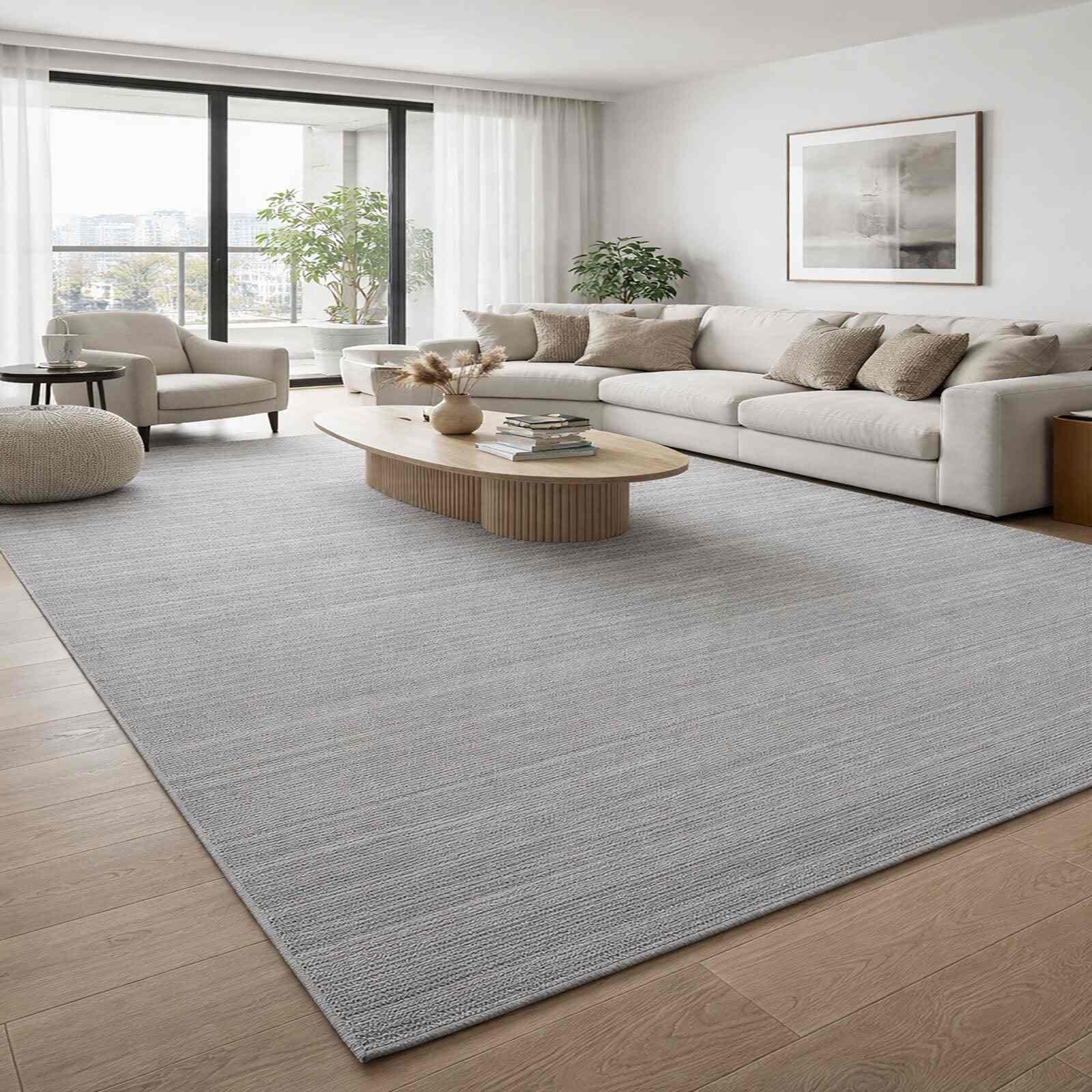
A rug can completely change the way a room looks and feels. It can bring together furniture, soften hard flooring, introduce texture and create a clear visual boundary within an open-plan interior.
Yet finding the right rug is not always as simple as choosing a colour or pattern that looks appealing.
One of the most common problems is size. A rug may look perfect in a showroom or online photograph but feel too small once it is placed in a real room. An unusual floor plan, large furniture arrangement or awkward architectural feature can make standard rug dimensions difficult to work with.
This is where Custom Rugs can offer a practical solution.
Rather than designing the room around an available rug size, a custom rug allows the floorcovering to be planned around the room.
Why Standard Rug Sizes Don’t Always Work
Standard rug dimensions are designed to suit common room layouts, but Australian homes are not necessarily built around standard furniture arrangements.
An open-plan living area may combine several functions. A narrow apartment may have limited floor space. A large family room may require a substantial rug to properly accommodate the seating arrangement.
Older homes can present another challenge, with rooms that have unusual proportions, alcoves, fireplaces or architectural features.
In these situations, forcing a standard rug into the space can result in awkward gaps or furniture sitting partly outside the intended area.
A custom rug changes the starting point.
Instead of asking, “Which standard rug will fit this room?”, the question becomes, “What size and shape will work best for this room?”
Start with the Furniture, Not the Rug
One of the most useful principles when planning a rug is to consider furniture placement first.
A rug is rarely an isolated decorative object. It normally interacts with sofas, chairs, tables, beds or other pieces of furniture.
In a living room, for example, the rug may be intended to sit underneath the front legs of a sofa and chairs. In another design, all furniture may sit completely on the rug.
Both approaches can work.
The important thing is to decide which arrangement is intended before determining the final dimensions.
Measuring the room alone isn’t enough.
A rug may technically fit within the room but still look disproportionately small if the furniture extends well beyond it.
Measuring an Open-Plan Living Area
Open-plan rooms are particularly suitable for carefully planned rugs.
A large room may contain a lounge, dining area and workspace without physical walls separating them.
Rugs can help establish these zones.
A rug beneath the lounge furniture can visually identify the living area. Another floor treatment can define the dining space.
The dimensions should be determined according to the furniture grouping rather than simply dividing the floor into equal sections.
This approach creates a more natural flow.
It also helps prevent an open-plan space from appearing like one large, undefined floor area.
Choosing the Right Shape
Customisation isn’t necessarily limited to size.
The shape of the rug can also be important.
Rectangular rugs remain the most common option because they work well with sofas, beds and dining tables. However, round, oval or specially shaped rugs can sometimes be more appropriate.
A circular rug beneath a round dining table can reinforce the geometry of the furniture.
A curved rug can soften an otherwise angular interior.
An unusually shaped room may benefit from a rug designed to follow its architectural proportions.
The shape should have a purpose rather than being selected simply because it looks different.
Rugs for Dining Areas
Dining rooms require particularly careful rug planning.
The rug needs to accommodate the dining table and allow chairs to remain on the rug when they are pulled away from the table.
If the rug is too small, the rear legs of the chairs can catch against the edge when people move them.
This can be uncomfortable and can also create unnecessary stress on the rug.
A custom rug can be planned around the actual table dimensions and expected chair movement.
For large dining rooms or unusual table shapes, this can be considerably more useful than selecting the closest standard size.
Bedroom Rugs
Bedrooms provide another opportunity for custom sizing.
A rug beneath a bed can extend beyond the sides and foot of the bed, creating a soft visual frame.
The ideal dimensions depend on the size of the bed, bedside tables, available floor space and the desired appearance.
A smaller bedroom may require a more compact design, while a large master bedroom can accommodate a substantially larger rug.
Custom sizing allows the rug to respond to these proportions instead of making the furniture arrangement conform to a pre-existing rug.
Creating a Rug for an Unusual Space
Some of the best applications for custom rugs are spaces that are difficult to furnish using standard products.
Consider a long hallway with an unusual width.
A standard runner might leave excessive space on either side.
A custom runner can be designed around the actual proportions of the hallway.
The same principle can apply to large studies, galleries, reception areas, reading spaces and rooms with architectural cut-outs.
The objective is to make the floorcovering feel like part of the architecture rather than something simply placed on top of it.
Colour Should Be Considered in Context
Choosing the colour of a custom rug should not happen in isolation.
Look at the walls, flooring, curtains, upholstery, cabinetry and natural light within the room.
A colour that looks warm under showroom lighting may appear different in a home with cooler natural light.
Natural fibres can also have subtle colour variations that contribute to their appearance.
Rather than trying to match every element exactly, many interiors benefit from choosing a rug colour that connects several existing tones.
For example, a neutral rug might pick up the warmth of timber flooring while complementing the cooler tones of a sofa.
Texture Can Be Just as Important as Colour
A rug doesn’t have to rely on colour to become a feature.
Texture can create depth even within a neutral palette.
This is one reason natural fibre rugs are popular in contemporary interiors.
A textured Jute Rug, for example, can introduce a relaxed woven surface.
A Sisal Rug can provide a more structured and durable feel.
An Abaca Rug can create another distinctive natural texture.
Choosing between these materials should depend on where the rug will be used and how much wear it is expected to receive.
Custom Rugs for Commercial Spaces
Custom rugs are not limited to residential interiors.
Commercial environments often have floor plans that require more precise solutions.
Reception areas, boutique offices, meeting rooms, hospitality spaces and retail environments may need rugs designed around specific furniture or architectural dimensions.
In a commercial setting, the practical requirements become particularly important.
The rug needs to be appropriate for the level of traffic, furniture movement and cleaning requirements expected in the space.
A beautiful rug that isn’t suited to the environment can become difficult to maintain.
Design and performance therefore need to be considered together.
Natural Fibres and Custom Design
Natural fibres can be particularly interesting when used in custom rug applications.
Materials such as sisal, jute, seagrass and abaca each have their own visual and tactile characteristics.
For example, Natural SISAL Floorcovering can provide a structured appearance across a larger area, while a custom sisal rug can introduce that material as a defined feature.
Similarly, natural jute can bring softness and relaxed texture to selected areas.
The advantage of custom design is that the material can be considered alongside the proportions and purpose of the space.
Don’t Forget Door Clearances
One small measurement can cause a major practical problem: doors.
A rug that looks perfect in a room may interfere with a door opening if its thickness and position have not been considered.
This is particularly important for bedrooms, studies, wardrobes and entrances.
Before finalising the dimensions, check the movement of every nearby door.
The same principle applies to built-in cabinetry and drawers.
Furniture needs to function normally after the rug has been installed.
Consider the Direction of Foot Traffic
Traffic patterns should also influence rug placement.
People naturally follow certain paths through a home.
For example, a hallway connects the entrance to living areas, while a pathway may run between a kitchen and dining area.
Placing a rug across a natural circulation route can create additional wear.
In some situations, a custom shape or size can help position the rug more effectively while leaving important walking paths clear.
This is especially useful in open-plan homes.
Custom Doesn’t Mean Complicated
There is sometimes a perception that a custom rug must be elaborate.
It doesn’t.
Customisation can be as simple as changing the dimensions of a neutral rectangular rug.
The value lies in achieving the correct relationship between the rug and the room.
A simple design in the right proportion will often look more sophisticated than an elaborate rug that is incorrectly sized.
The best custom rug is not necessarily the one that attracts the most attention.
It is the one that makes the entire room feel more balanced.
Planning Before Ordering
Before finalising a custom rug, it is worth creating a basic floor plan.
Measure the room carefully and mark the main furniture.
Include doors, windows, built-in cabinets and other permanent features.
Then consider how much of each furniture piece should sit on the rug.
For large rooms, temporarily marking the proposed rug dimensions on the floor with painter’s tape can be useful. It provides a much clearer impression of scale than simply looking at measurements on paper.
Walk around the proposed area and check whether the dimensions feel practical.
This simple step can prevent expensive sizing mistakes.
Maintenance Should Influence Material Selection
The material should be selected according to the room’s conditions.
A decorative rug in a quiet bedroom has different requirements from one placed in a busy entrance.
Families with children, pets or frequent visitors may need to consider cleaning and durability more carefully.
Natural fibres can be an excellent choice, but they should be matched with an environment where their characteristics are appropriate.
Maintenance instructions should also be followed carefully because different fibres respond differently to moisture and cleaning products.
When a Custom Rug Is Worth Considering
Custom rugs are particularly useful when:
- The room has unusual dimensions.
- Standard rug sizes don’t work with the furniture.
- A specific shape is required.
- An open-plan area needs visual zoning.
- A large dining table requires a properly proportioned rug.
- A commercial space needs a floorcovering designed around its layout.
- The homeowner wants a specific natural fibre and precise dimensions.
The decision ultimately comes down to the relationship between the floor, furniture and room.
A More Considered Approach to Flooring
Good interior design is often about proportion.
The right sofa can still look wrong if it is too large for the room.
The right dining table can feel uncomfortable if there isn’t enough circulation space.
A beautiful rug can have the same problem if its dimensions don’t relate to the surrounding furniture.
Custom Rugs provide a way to solve that issue by treating the rug as part of the overall interior rather than as an independent accessory.
A well-designed Floorspace custom rug can bring together furniture, define zones and create a stronger sense of proportion within a room. The process begins with understanding how the space is used, followed by careful measurement, material selection, shape, colour and placement. Whether the setting is a family home, apartment, office or commercial interior, a considered approach can make the finished result feel far more intentional.
For homeowners, designers and businesses across Melbourne and surrounding suburbs, Floorspace offers Custom Rugs and a range of natural flooring options designed to suit different interiors and practical requirements. With materials including sisal, jute, seagrass and other natural fibres, the right combination of material and dimensions can help create a floorcovering that belongs naturally within the space.